Retail Insider • January 16, 2026
After trending downward through the first three quarters of the year, Calgary’s overall retail vacancy declined further in Q4 2025 to 3.4%, representing a 90-basispoint improvement year over year, says a new report by Barclay Street Real Estate.
“At year end, available retail space remained below what we consider a balanced market threshold of 2.0 million square feet citywide. As space scarcity increased, early upward pressure on rental rates began to emerge across several retail nodes. Total retail inventory reached approximately 45.6 million square feet, reflecting an increase of nearly 700,000 square feet since the beginning of the year,” said Barclay Street.
The report said new supply was delivered this year through the completion of multiple projects, including EV606, The Mondrian, Frontier, Junction 88 & Block C, Fourth Street Lofts, and The Podium. Additional retail inventory remains in the development pipeline, with many projects anticipated for completion in 2026 or early 2027.
“New supply continues to be dominated by smaller-format units ranging between 1,000 and 3,500 square feet, aligning with sustained demand from service-based and neighbourhood-oriented retailers. Proposed earlier this year, Vesta Properties mixed-used project – Broadway on 17th – has started taking shape in Calgary’s Beltline. The development will consist of condos, apartments and ~70,000 square feet of retail spaces: including a grocery store, shops and restaurants,” said the company.
New development activity continues
It said new development activity continued into year end. In December, the City of Calgary issued a building permit for nine commercial retail unit buildings at the Livingston Commercial Centre, totaling approximately 113,000 square feet, further contributing to the city’s near-term retail pipeline. Alongside inventory growth, overall retail occupancy increased by 130 basis points year-over-year. Net decreases in vacancy were recorded across Northeast, Northwest, Southeast and downtown quadrants. The Southwest quadrant was the sole exception, with vacancy increasing by 50 basis points. Current expansion activity remains concentrated among service-based and value-oriented retailers, particularly across the eastern split of the city.
“Retail development is increasingly being integrated into residential communities through mixed-use formats, extending a trend observed since year-end 2024. This approach supports Calgary’s 15-minute community planning framework and reinforces the long-term resilience of neighbourhood-serving retail by embedding daily-use services closer to population growth. Notable tenant activity during the quarter reflected both portfolio rationalization and continued confidence in well-located retail,” according to the report.
Downtown retail remains in transition
The report said Starbucks closed its Britannia Plaza location as part of a broader corporate downsizing initiative. Subsequently, Good Earth Coffeehouse announced plans to acquire several recently closed Starbucks locations across Canada, highlighting continued demand for established neighbourhood retail sites. Mid-quarter, Walmart Canada confirmed its tenancy at Taza Park West, reinforcing the project’s positioning as a major retail node within Calgary’s southeast growth corridor.
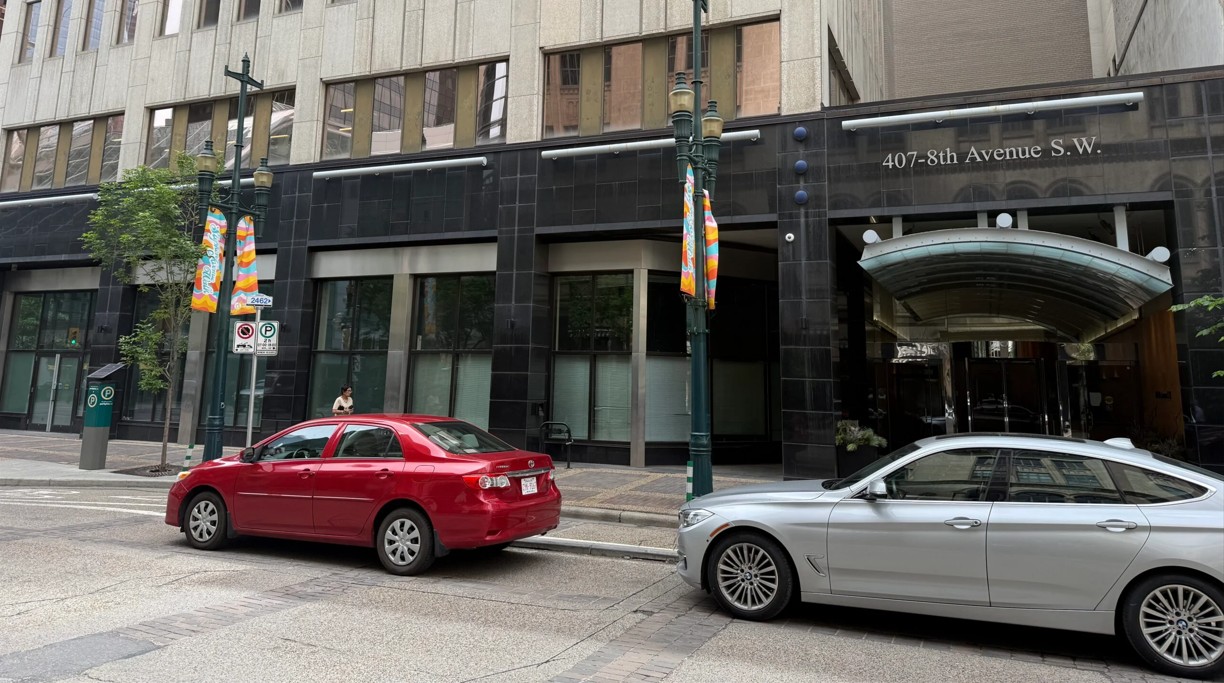
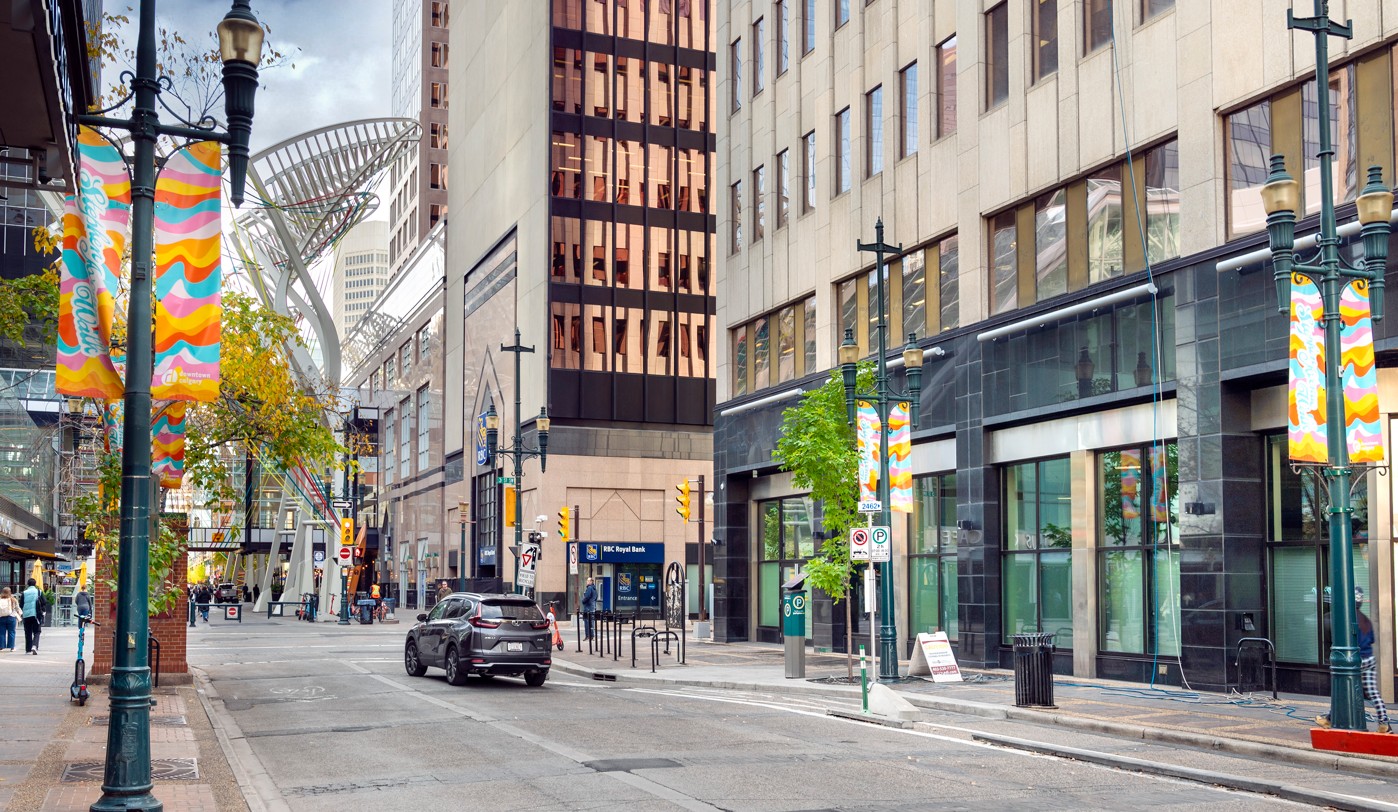
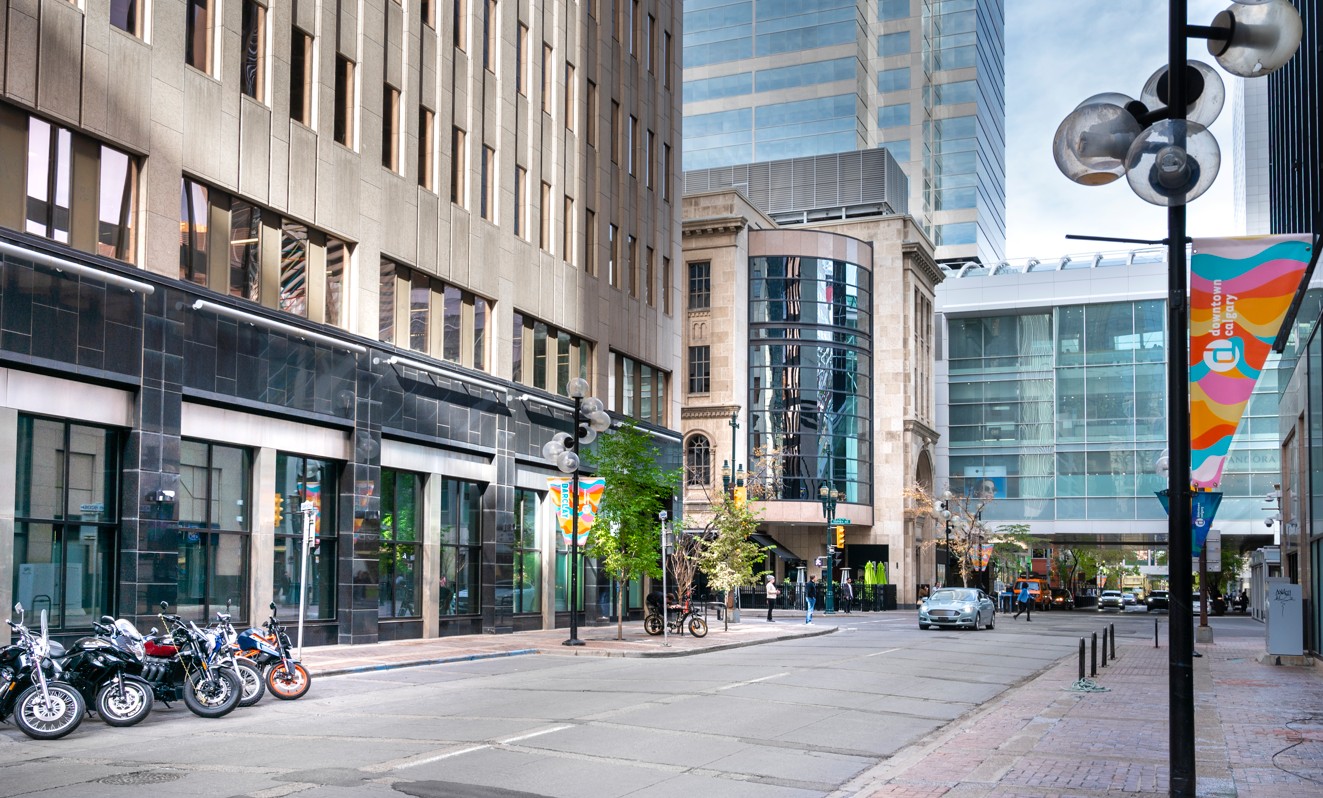
“Downtown retail remains in transition. Questions persist regarding the future of Calgary’s historic Hudson’s Bay building, which was added to the National Trust for Canada’s Endangered Places list during the quarter. As office and residential conversions progress downtown, retail is shifting away from traditional department store formats toward more communitydriven environments. Construction around the revitalization of Stephen Avenue has begun, including the availability of the former Arnold Churgin shoe store space – marketed by Barclay Street Real Estate – underscoring this evolution.
“Overall, 2025 marked a strong year for Calgary’s retail market. Citywide vacancy declined from 4.0% at the beginning of the year to 3.7% by year end, reflecting steady absorption despite continued inventory growth.”